
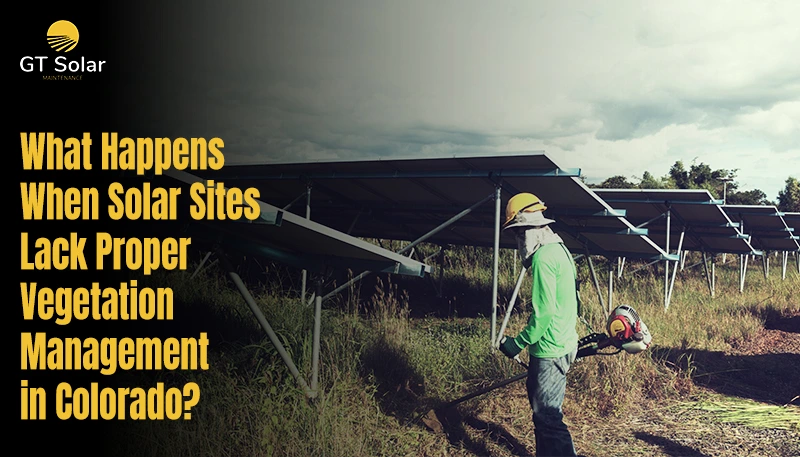
Neglected plant growth quietly damages solar sites as well as cuts energy output and raises fire risk fast. Weed invasion plus access issues as well as shading and expensive repairs are the problems that result from the lack of solar vegetation management in Colorado. This guide shows you exactly what goes wrong when maintenance stops and how to prevent it.
How Overgrown Vegetation is Harming Your Solar Panels?
Trees and bushes directly reduce the amount of electricity your solar panels generate. Tall grass and weeds cast shadow onto panel rows, and reduce the daily output and sun capture by the panels. If a panel is shaded, even if it’s just one cell, it can slow down the performance of the entire connected string of panels. In Colorado, fast spring growth after snowmelt makes this problem worse within just a few weeks. Maintaining solar panel row maintenance regularly ensures clearances, air flow and energy production is consistent. Monitor your production each month to identify shading losses early to prevent permanent loss of revenue.
How Unmanaged Growth Increases Fire Danger?
If left unchecked, dry vegetation can become fuel for the problem threatening your entire solar installation. Colorado’s dry summers and high elevation winds create ideal conditions for grass and brush fires. Dead plant material under panels ignites easily and spreads flames toward wiring as well as inverters and combiner boxes.
Good solar farm fire mitigation eliminates that fuel load and provides defensible space for equipment. There are often requirements for cleared buffers around ground-mounted energy systems in County fire codes throughout Colorado. Conduct solar site brush removal during the pre-fire season (June) every year to remain compliant and protected.
What Weeds Do to Site Access and Equipment?
Weeds not only cause an eyesore, they obstruct access and can cause damage to the sensitive site infrastructure. Excessive growth obscures trip hazards plus conceals cables and delays routine inspections by technicians. The aggressive roots can pull the racks and cause them to crack the conduit and disrupt the graded surface under the panels.
Noxious species such as Canada thistle and cheatgrass are fast colonizers of open solar acreage in Colorado. Targeted utility-scale weed control stops invasive plants before they overwhelm gravel pads and fence lines. Use mechanical clearing and appropriate treatments to maintain all service roads in a clear and safe condition.
Comparing Managed Vs Neglected Solar Sites
Managed sites and neglected sites produce very different results over a single operating year. The difference is seen in the consistency of care in the production or safety and long-term value of the site. Use this table to compare the performance and risk that you can expect with your site.
| Factor | Well-Managed Site | Neglected Site |
| Energy output | Stays near full capacity | Drops from shading losses |
| Fire risk | Low, cleared buffers maintained | High, dry fuel builds up |
| Equipment condition | Protected and accessible | Damaged by roots and weeds |
| Compliance | Meets county fire codes | Faces fines and violations |
| Repair costs | Predictable and planned | Sudden and expensive |
Reliable care keeps you on the left column where costs stay low and predictable. Check on these factors quarterly to see if the maintenance plan offers the real protection it’s supposed to.
Which Services Keep Colorado Solar Sites Healthy?
The right services will maintain your solar site productive, compliant and safe throughout the year. For solar power installations, it is essential to keep the grass at a safe mowing height, which can be achieved by proven solar farm mowing services. Scheduled visits match Colorado’s growth cycles so vegetation never reaches dangerous or shading heights.
Effective ground-mounted solar vegetation control blends mowing plus targeted spraying and manual clearing for full coverage. Professional solar farm mowing and weed control services in Colorado are bundled to take care of surface and persistent invasive roots. Ask any provider for site photos as well as service logs and references before signing an annual contract.
How Can You Create a Dependable Maintenance Schedule?
A good maintenance plan will ensure that minor issues do not cause major failures on the site. Prior planning ensures your Colorado solar site remains safe, compliant and continues to produce revenue all year long. Here are some steps to creating a plan that works with your land and climate.
- Inspect Quarterly: Walk every panel row and access road to spot growth, damage or hazards early.
- Schedule Seasonal Mowing: Time cuts around spring melt and summer peaks to match Colorado growth patterns.
- Treat Weeds Proactively: Apply approved controls before weeds are allowed to set seed throughout the site.
- Document Each Visit: Date and record photos as well as logs to demonstrate compliance to county inspections.
- Review Vendor Performance: Confirm your provider meets clearance, safety and reporting standards every season.
This type of regular maintenance is essential to trusted vegetation management for utility-scale solar farms in Colorado. Create calendar reminders to prevent any seasonal task from being missed.
Keep Your Investment Safe Today
Your solar site is a significant investment that needs accurate, reliable and proactive maintenance. Professional vegetation control for ground-mounted solar sites keeps output high and fire risk low. GT Solar Maintenance provides scheduled mowing, weed, and brush removal services tailored to Colorado’s climate.
You receive service records that are clear, accurate, and reporting honesty and technicians who are knowledgeable of utility-scale requirements. Don’t let overgrowth negatively impact your panels, compliance, and bottom line. Book your solar service today and ensure your site is operating safely.