
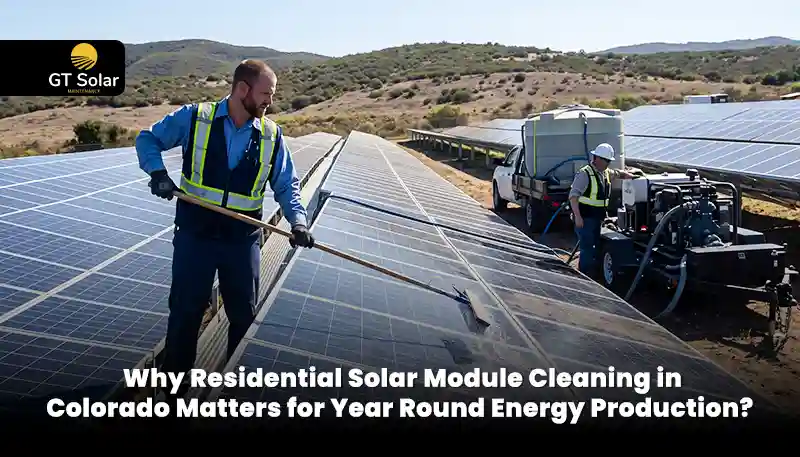
Dust and pollen usually settle on your panels and quietly reduce how much power they produce each month. That is where residential solar module cleaning in Colorado comes handy. It removes that layer that blocks sunlight and cuts into your daily energy output. When the surface stays clear, your panels convert more of Colorado’s strong sunshine into usable electricity throughout the year.
There are more than 300 days with sunshine each year in Colorado but debris gets in the way of the majority of that sunshine reaching your cells. Regular cleaning helps you protect the investment you made and supports steadier production across all four seasons.
Why is Panel Cleaning So Important?
Sometimes the grime accumulates so much that it can cut output by a quantifiable percentage over time when skipping cleaning. The exact loss usually depends on your location as well as roof angle and how much dust or pollen settles nearby. You must also know that the debris can reduce your solar panels output from 5% to 25%. That is where proper solar panel maintenance for residential properties can help you avoid these performance drops.
Scheduling Solar Panels Cleaning in Colorado
Experts recommend that you should do cleaning two to four times a year while depending on the Colorado environment. Homes that are close to construction sites and open fields or busy roads will require more regular maintenance as dust will settle more quickly. Spring cleaning is done to get rid of pollen and fall cleaning is done to get rid of leaves and to make panels ready for winter loads.
You should also schedule cleaning after major dust storms or wildfire smoke events common across the Front Range. A consistent schedule keeps your system producing near its rated capacity through every changing season.
Seasonal Cleaning Needs Across Colorado
| Season | Common Buildup | Suggested Action | Production Risk If Ignored |
| Spring | Pollen, dust | Full cleaning | Moderate |
| Summer | Dust, bird droppings | Spot cleaning | Moderate to high |
| Fall | Leaves, debris | Full cleaning | High |
This table displays the seasons and challenges associated with them, and their impact on the amount of energy you can collect on your panels.
A Simple Comparison Between Cleaned and Uncleaned Panels
It’s easy to see the impact when you view them side by side, and that’s the reason why routine cleanings are important for your annual returns. The difference between the clean and dirty panels widens during the pollen season and after prolonged dry periods.
| Factor | Cleaned Panels | Uncleaned Panels |
| Energy output | Near rated capacity | Reduced by soiling |
| Panel lifespan | Better protected | Faster surface wear |
| Warranty support | Easier to maintain | May raise questions |
| Monthly savings | More consistent | Less predictable |
Clean panels give you more reliable numbers on your utility bill and reduce guesswork about your system’s health.
Vegetation Affect Solar Panel Performance
How does vegetation affect solar panel performance? The simple and straight answer to that question is that they create shade or drop debris and block airflow around your panels and mounting hardware. Even partial shade on one cell can lower output across an entire panel string during peak sun hours. That is why solar vegetation management in Colorado plays a direct role in keeping your production steady.
The warm months of Colorado see rapid growth of tall grass, shrubs and tree branches invading your array. Trimming nearby plants and handling solar panel debris removal keeps sunlight reaching every cell without interruption. If you search for solar vegetation control near me, you are already thinking about protecting long term output.
What Problems Can Overgrown Vegetation Cause at a Solar Site?
Overgrown vegetation can cause shading losses as well as fire risk or pest habitats and blocked access for routine service visits. On larger sites, uncontrolled growth also interferes with wiring as well as tracker movement and drainage across the ground surface. These concerns are relevant to utility-scale solar site maintenance in Colorado projects as well as home systems.
Consider the main risks overgrowth introduces to any solar installation:
- Shading losses that reduce daily and seasonal energy production
- Fire hazards from dry brush during Colorado’s wildfire season
- Access problems that slow inspections and delay needed repairs
- Equipment damage from roots and vines or debris near hardware
It is more economical to control these risks early than to deal with the consequences of unrestrained growth on a site.
Why Do Ground Cover and Site Access Matter?
Plant management for solar farms ensures that the height of plants is kept in check to prevent panels from being obscured and to ensure the safe movement of the technicians. A well planned ground cover management for solar farms will also minimize dust control and fine soiling onto panel surfaces, while at the same time minimizing erosion. These benefits both help to polish arrays and keep them producing over the entire system’s life. Together, solar site access and vegetation control allow crews to access all rows quickly and easily without delay or obstruction. Clear paths allow for inspections and cleaning to follow the schedule and issues are identified before they become more significant.
The Role of Regular Inspections
Regular solar array inspection services can identify soiling, damage, loose connections and vegetation problems before they diminish the production of the array. Each visit, trained technicians inspect the surface of the panels, mounting locations and growth around the panels. Combining inspections with cleaning provides a better understanding of month-to-month system performance. The inspection will also log your maintenance history that could be useful for warranty claims and when you go to sell your car in the future.
Building a Year Round Maintenance Habit
A regular maintenance routine includes cleaning, vegetation management and checking the system. The first step is to create a cleaning plan based on the seasons in Colorado and make a couple of modifications for your area and environment. Consistency matters more than any single cleaning since small efforts spread across the year prevent large losses. This way, you can save production as well as prolong equipment life and prevent unexpected repair costs over time.
FAQs
How often should you clean solar panels in Colorado?
Most Colorado homes benefit from cleaning two to four times yearly with more frequent cleaning near dust and fields or roads.
How does vegetation affect solar panel performance?
Nearby plants cast shade as well as drop debris and block airflow that can lower output across an entire panel string during peak hours.
What problems can overgrown vegetation cause at a solar site?
Overgrowth can create shading losses plus fire risk and pest habitats also lead to blocked service access and equipment damage from roots or debris.
Why does solar panel debris removal matter?
Solar panel debris removal matters as it clears leaves or dust and buildup keeps sunlight reaching every cell. This process also helps your panels produce steadier energy across all four seasons.
What does ground cover management for solar farms involve?
It keeps plant height controlled, reduces erosion, limits dust, and helps technicians reach every row safely for cleaning and inspections.
When should you contact a professional cleaning service provider?
You should reach out to a professional cleaning service provider when you notice soiling as well as shading or overgrowth. On top of that, if you want a practical plan for cleaning, vegetation control and inspections.
Talk to Professionals About Your System
If your panels show soiling and shading or overgrowth, GT Solar Maintenance can review your site and outline a practical plan. Share your location and system size also current concerns as it you get clear next steps for cleaning or vegetation control and inspections. Reaching out early helps you keep your Colorado solar system producing reliable energy through every season ahead.